Pages

Showing posts with label ASL. Show all posts

Saturday, November 3, 2012

America, We Have a Problem...

America, we have a problem.  Ok, so, to be fair, America has a lot of problems.  But never in my time of study of Deaf Culture and American Sign Language have I ever read about or seen something so terrible in CURRENT oppressive forces, particularly in the media. 

More often than not, Oppression is subtle.  Stigmatizations sneak up on people, most of the time they may not fully understand what message they are sending, when they send it - this is not the case with Chelsea Handler.  

I saw on Dale H Boam's Facebook status (he's a UVU ASL Professor, and a Lawyer) how TV Personality, Chelsea Handler had made mockery of Lydia Callis - and the Language (innately connected to the Culture) of the Deaf Community.  This was orginally posted on Nov 2, 2012 around 8:00 am. 
Re: Chelsea Handler.

I was recently shown a clip from Chelsea Lately where she makes fun of American Sign Language. Specifically she lampoons Mayor Bloomberg's ASL interpreter. As an attorney who represents persons who are Deaf I was highly offended at this unfunny an offensive portrayal of a skilled interpreter using the appropriate linguistic markers as being somehow amusing.

Historically the Deaf community as an oppressed minority have suffered for their language and lack of access. I have represented persons who have lost family members because doctors refused to provide sign language interpreters, persons who have been abused by the police for failing to follow orders when no interpreter was present and the police knew my clients could not hear. I have represented students who have been excluded from classrooms because the school felt their language was too distracting.

During a time of great emergency I was thrilled to see the Mayor mindful of persons who are Deaf; persons who are at greater risk by reason of the linguistic barrier they face.

As stated, the interpreter was using proper linguistic markers and frankly did a fantastic job. Just because Chelsea Handler is so culturally unsophisticated that she laughs at the funny Deaf talk, it does not mean that rest of the world needs to share in her cultural insensitivity and generalized stupidity. Chelsea joins the ranks of Michael Richards and other so called comics who to drag their audience into degrading others to hide the fact that they actually don't have anything funny to say.

Shame on her and shame on E!

Dale H Boam
I tried my best search engine skills to find the original video.  For obvious reasons, the "owner" has taken it down. --> Cowards. 

You guys, this isn't just about one person making light of another person's language or accent.  This is a perpetuation of arrogance and ignorance for the treasure that the Deaf Community is.  The vast majority (yes, I am referring to hearing people - and yes I know I am a part of the majority)  doesn't know or appreciate what the Deaf Community has to offer, and I will admit right here and right now that I still don't fully comprehend the amazingness of the Deaf Community and American Sign Language. 

In the comments on Dale's Facebook, I read about how some people may think that this uproar (true-business, there is an uproar) is unnecessary, due to the fact that Handler is bringing more attention to sign language, and such an overt response is a result of over-reaction.  His replies were as such:
If no one complains when it is not funny, or no one tries to educate when they see ignorance... Nothing changes.
 And this, regarding the idea of spoof/satire: 
A spoof or a satire require an understanding of the subject matter and an exaggeration of a humorous aspect thereof. Chelsea was not spoofing the humor of interpreting (that was done very well on an episode of spin city) she was ridiculing how stupid she thought sign language looks without understanding the implications thereof.
 Laurie Robbins Shaffer had this to add to Dale's insights:
I find the skits very offensive to the language of ASL, to Deaf people and to the profession of interpreting. Oppression in the form of humor is still oppression.
Oh, and this just in, it isn't just Handler who is making light of Callis' Interpreting and ASL as a whole, apparently Saturday Night Live just did something as well.  More on that later... 

Links: 
Change.org
Deaf Echo 
Deaf Network of Texas
Examiner.com


Also, there are tons of video responses to this topic regarding Chelsey Handler and Lydia Callis on YouTube, feel free to search it up. 

So, raise of hands, who's coming to the Oppression Conference at UVU now?  Come learn more about what Oppression really is and how we, as decent human beings, can break through the barriers put up by ugly arrogance and judgment, and engage to bring change to the stigmatizing and oppressive perspectives & treatment of minorities.


That's all I've got for now, peeps. 

~Holly

Monday, October 8, 2012

Stuck on the “Error” of My Ways…

I think I am starting to really identify what slows me up when I look at doing my work for ASL classes.  I am not confident in my ability with the language. Why?  I am not confident in myself to convey it [the language].  Looking over past reading assignments, I can see that I focus too much on finding reasons for errors, which Patrie reports (via Kussmaul) that such focus is appropriate for language learning.  (CI Book, page 7-8) So either I don’t know the language – which is doubtful since I have been learning, studying, and practicing ASL since 2005 – or I am psyching myself out.  I think it is the latter. 

A few of things could be happening to me.  I could be having more seizures and therefore struggling cognitively.  I could be experiencing more severe side effects from the Depekote which can cause severe drowsiness, irritability, and depression, among other things – so I might be unsure of myself because of that.  I could be focusing on the stigma and oppression of identifying as a person with a disability, as compared to when I was younger and I didn’t identify that way – being in an oppressed minority can cause depression, can it not?  I seemed to succeed more when I was younger, but then I am studying a foreign language.  Would it not be easier for me to study something in my native tongue?  Maybe I am finally dealing with the sorrow of the loss of my Father, which I was strictly instructed to put behind me and move on quickly.  I really do miss him.  Maybe I am tired of living with my Mother and feeling I cannot assert my independence.  Maybe I am just genuinely depressed apart from everything else – I have been diagnosed as being “depressed” in the past. 

Why do I base the worth of myself in what others say?  I berate myself for any little thing that is said negative about me.  Why do I fall apart when I am rejected by a romantic prospect?  Why do I live in the past where all of my sins are?  I can’t move forward if I am living this way, but I feel stuck.       

I want so much to give up and say that I can’t do it because of this, this, and that.  It would be easier that way.  I am behind on my schoolwork and it isn’t appropriate to utilize ADA accommodations for this, is it?  No, I highly doubt it.  I just have to face my teachers and accept the consequences for not being responsible. 

Anyway, I focus far too much on what is wrong with my signing, and I worry too much that I am going to screw up the interpretation.  I worry that I won’t pass the certification exams.  I worry that, if I do become certified, I will somehow inadvertently breach the interpreters code of ethics.

So, the main question here, aside from my psychological status, is how do you go about determining the communicative function of the [miscue]?  I read the example about President Carter’s interpreter and the grave errors that s/he made during a visit to Poland.  I know that I won’t be doing anything that… (For lack of a better word) “…Important” as I start of at the Novice level, but I am pretty sure I would die (literally) if I knew that I had be the originator of such a serious miscue. 

I am so… pardon my language, but I am so damn over-analytical of myself… I really want to pursue a career in ASL interpreting, but things like this make me wonder if can I handle it?  What are the necessary adjustments I need to make in order to do so?  Can I make those adjustments in a timely manner?  Is it worth it?  Really? 

That’s all I can think about for now.

Audfairy88 over and out.

Friday, February 25, 2011

Films with Deaf Characters - Critique #1

You'd Be Surprised
 
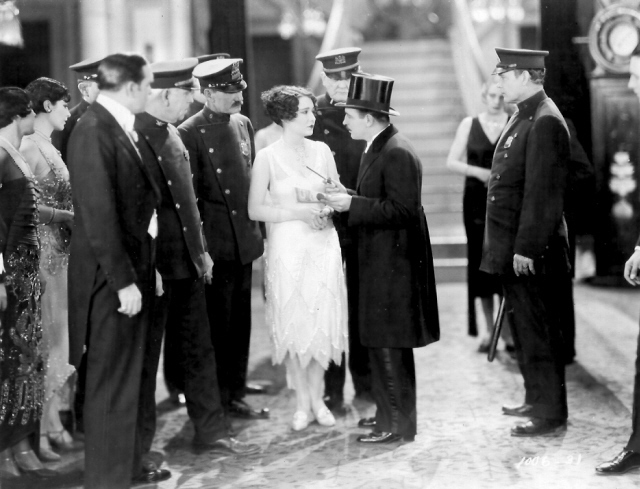
From the golden era of movies comes a film that is both a comedy and a murder mystery; it is entitled, You’d Be Surprised. This silent film was released in 1926, towards the end of that golden era, which the older generations of the Deaf community remember. The film’s director was Arthur Rosson, who directed two other films released that same year – Wet Paint (a farce) and Stranded in Paris (based on the play). B.P. Schulberg, who was, after the golden era, Head of Paramount Pictures in the 1930s, produced You’d be Surprised. Overall, a viewer of today’s generation can appreciate the work they put into the cinematography of the film. A few elements of the cinematography to discuss are the script, direction, acting, and plot. First comes the comment about the script.

A typical viewer of today would find the script of You’d Be Surprised, to be surprisingly entertaining, mysterious and comedic even upon it’s repetitiveness. A couple of phrases that were said at least four times to add humor to a seemingly serious moment were phrases such as, “Don’t touch anything! This is a case for the coroner,” as said by varying degrees of policemen and inspectors alike. There was also the daunting word, “guilty!” which was said by the bizarre jury who seemed just as keyed up to be done with the investigation as the coroner did. Their excited anticipation added superfluous humor to another, feasibly intense, moment. Another great thing about the script that a viewer might notice were the coroner’s witty statements on the title cards. It started with Aesop’s quote, then there is the playful accusation of murder to one of the women, and the coroner says, “Mayhap you did it – in a spirit of jest?” Or there is the solution to finding out who committed the crime, “…let’s offer a prize.” Other title cards are ironic, or they have the use of puns. While the script was written well, it wouldn’t be much use without the directing of the film, the second element of cinematography to be discussed.

The direction of the film seemed to be creative. It was referential to a few superstitious things such as the date, Friday the 13th, and the black cat that skulks around the houseboat. The film initially follows this cursed cat around – allowing the viewer to see different scenes of what is happening during the party before the mysterious murder. As for the acting, a viewer would find (in contrasting movies of today) gestures and expression really made up for the lack of voice or sound. Also, those who know sign language and are involved in Deaf Culture will recognize the extra effort taken for gestures and expression are especially beneficial to Deaf people’s understanding. Just as there were repetitive, comical things written in the script, similar actions were given as well.

Actions such as the coroner taking the inspector’s badge to indicate that he had solved the crime. Or there was the coroner’s corny flip of a coin to let fate decipher what would happen next. It usually worked to his advantage. Then there were the times when the policemen were told to take away the accused woman (Dorothy) and the coroner comically prevented it by his gestures and slaps. This happened three times with the inspector (Mr. Brown) and once with the deputy district attorney (Mr. Black), which provides an ironic parallel since he actually knows she did not do it. The last notable repetitive, comical action was when the coroner tries to use himself as bait, and every time he tells a man to turn off the lights, someone tries to surround him from being killed. First it’s Dorothy, then the jury, then the police officers. While this last set of actions is comedic, the resolution that follows isn’t quite as consistent.

Upon viewing the movie a second time, the viewer will notice more about the man who they arrest – Mr. Black. While he fits the character of murderer quite well with all that he says and does, the way in which he is arrested and accused is quite un-ceremonial (as compared to the interactions that happen between party guests and the playfully accusing coroner) and it is very disappointing to see that the coroner doesn’t really give him much of a hard time about being the murder. This is somewhat un-satisfying to the viewer. When something like this occurs in media, many times the viewers will observe other ways to present the same type of media to their satisfaction.

It is possible in today’s media that such a story, even to remain silent, would be a really comical and satirical skit/spoof for shows such as Saturday Night Live or Mad T.V. It would also be a good short play for high school and/or college drama programs, as I believe it would teach aspiring actors how to use more than just their voice to say what they need to say in order to portray the story. It would be very important, if the media did a re-make of You’d Be Surprised, to portray the role of the deaf butler in a more correct form, because anyone who is involved in Deaf culture will know that as a deaf character he was not portrayed correctly.

The butler was not portrayed correctly as a deaf character; they really made him seem less intelligent as they were not consistent with the idea of him having the use of his peripheral vision. Also, they seemed to direct him to have a face vacant of expression. This is another thing that misrepresents the Deaf community, as Deaf people are usually very animated in their body language and facial expression. An additional way that he was not portrayed correctly was having him hide childishly behind the chair and lastly, the fact that he was not included in the conversations, he stood as still as statue until the coroner addressed him. Even if this were how he was to act for the role of the butler, an advocate to the Deaf community would see this as an oppressive action to not include him in the conversation. Aside from the inconsistencies about the deaf character there was only two other inconsistencies that I found to be startling, first there was the positioning of Grey, the butler, when he is supposedly stabbed to his death. Then there was the fact that Grey miraculously re-appears as the deputy coroner. Let’s discuss specifically the positioning of Grey upon his “death.”

As Grey stood in the center of the room, waiting for the lights to go off, the viewer sees that he is facing the left side of the room (from the viewers perspective). When he is struck dead, he is laying facedown towards the right side of the room. Unless the murder is further investigated, this is a visual inconsistency. The viewer is to understand from this that the directionality and positioning of Grey’s body presents a sort of parallel with that of Mr. White’s dead body at the beginning of the film. This is the only real problem that a typical viewer might find within the film.

You’d Be Surprised is a witty, funny film about a murder at a dinner party, which seems like it could have been part of an influence for the game, Clue. Raymond Griffith keeps viewers on their toes for his moments of hilarity, irony, and wit. Overall, a very enjoyable silent film – especially enjoyable to those who understand the beauty of facial expression and body language. 

Sunday, February 20, 2011

Understanding the Importance of Language & Culture, The Humanity of Respecting Diverse Populations, and the Deaf Community.


Why should deaf people exist?  Why should we care?

(For a preview to this paper, please see my previous post)
This is a query that is morally and ethically disturbing but necessary to address. First and foremost, the question should not be, “why should deaf people exist?” but rather, “why should deaf people not exist.” Furthermore, why should any human being not exist or be appreciated for their cultural heritage, for their language, for their having a life on earth? This is the short answer to the query at hand, which leaves one with ponderings of all of the above questions. But it would be imprudent to leave one to musings alone without any other answer. The above questions will be answered by focusing on four main elements: first, the various definitions of a human within humanity; second, basic monotheistic religious beliefs; third, the societal perspective of disability; and fourth, the existence and richness of the language and culture of the deaf. So I will now ask a question once more, its focus being that of the definition of what deaf person is first and foremost – a human.

Starting with the simplest, yet most complicated of questions, what is a human? The Oxford American Dictionaries1 defines a human as being “a person as distinguished from an animal or (in science fiction) an alien.” Even with this definition, full understanding of what it means to be human is not gained. In turning to the thesaurus, which also comes from the Oxford American Dictionaries, there are many synonyms given to suggest further meaning of the word human. All synonyms are used as adjectives, words describing imperfection, compassion, as well as the form of a human. Let us look to the first two sets of synonyms, first being imperfection.

Humans are not perfect. This we can all agree upon. We, as humans, are “imperfect, vulnerable, susceptible, erring, [and/or] error-prone.”1 In recognition of this fact, we can then realize why we do not always give every other human being on earth, in America, in our own state, even leading to giving humans in our own community, the respect they deserve for their history, culture, language and for being a fellow human being. However, this fact describing human in imperfect forms is not justification for disrespect, belittlement, or pity upon another group of humans. Acknowledging this fact, for one-self, allows us as humans the opportunity to change what can about how we choose to live our lives and how our lives affect others. Taking advantage of this opportunity, upon self-acknowledgment, allows us to do the humane thing and treat each other with the respect deserved. In reference to acts of humanity, we can now look to the next set of synonyms, which is initialized with the word, compassion.

Humans have the capability of being compassionate. This too we can all agree upon, because compassion is a characteristic that can be learned and chosen to be utilized. Compassionate is at the front of the second set of adjectives; adjectives which are synonymous for the word human, and focus on words that are humane in nature. Words such as, “compassionate, humane, kind, considerate, understanding, sympathetic, tolerant; approachable, accessible.”1 Interesting, is it not, that a word originating from the word human is used as an adjective for “…showing compassion or benevolence?”1 Let us delve further into our thesaurus and see what some other words are for humane. Synonyms for the word are,

“compassionate, kind, considerate, understanding, sympathetic, tolerant; lenient, forbearing, forgiving, merciful, mild, gentle, tender, clement, benign, humanitarian, benevolent, charitable; caring, solicitous; warmhearted, tenderhearted, [and] softhearted.” 1

Listed also in the thesaurus are antonyms as well; humane has a solitary antonymous word: “cruel,” remember this antonym.1 One could then imply from the given differing verbiage that humans would be humane since they are connected via verbal origin. Yet it seems that if that truly were the case, we wouldn’t even be wondering why we, as people whom are a part of a community, society and population, are asking a question about a group of people who are oppressed by audism.

If humans are as humane as we’d like to be in understanding the value of another person and who they are, then we would not be questioning the importance of their language, culture, heritage and even their living existence. Do not misunderstand the meaning here, please, question another’s heritage, learn of their history and language; but question why it is important that another group of people exist and especially exist peaceably? The thought, in and of itself, is inhumane. Thoughts lead to actions, and therefore we can account for the cruel and inhumane actions that arose from these types of thought. What then, can assist us in the prevention of everyday cruelness to our fellow human beings? The answer then lies in the un-solidified and ever-changing nature of morals, ethics and philosophy.

It seems the most obvious standard of morals and ethics, taught to a vast number of the worldwide population, would be the basics of religion. A few of those basic principles will be addressed in order to describe the equality of all human beings. The majority of religious people believe that there is one divine creator. Call the creator what you will, however, for this purpose the creator will be referred to as God.

God created the world and all things in it, the first chapter of the first book of the Bible, Genesis, accounts for this.2 There are multiple notations in the Bible, and other religious books, of the past and present populations being sons and daughters of God. For example, in the book of Psalms, chapter 82, verse six reads, “…all of you are children of the most High,” in this context, the most High2 Here we recognize that we, as humans, have more in common with each other than just being of the same species. We recognize that the same divine being created us all, God created us all. refers to God.

In recent years, modern-day spiritual leaders reiterate this basic principle as we view ourselves as the offspring, or creation of God, “Man is the child of God, formed in the divine image and endowed with divine attributes.”3 In this quote, man is used to refer to all human beings, male and female. Aside from that, however, note the last phrase of the sentence and how we, as children of God are endowed with divine attributes. Many interpretations can be made from this, but no matter how it is interpreted, it literally means to be given qualities or characteristics that are set apart for each individual. So, while we were all created by God and share that as a universal similarity, He created us to all be different, to be unique people. Do the differences God created us with, give us justification to not “…love one another?”4 What is it, exactly, that causes look down upon others who are different from ourselves? How different, really, are deaf people from hearing people? Why are the Deaf so oppressed? In a blunt word, commonly associated with medicine and law, they are disabled.

Disability is the highlighted topic in Joseph P. Shapiro’s book, No Pity, which presents many points of view concerning ideas about disability and the experiences of people who live with it. People with disabilities make up a large part of what is considered to be diversity among the population. In specific reference to the disability movement, which didn’t even emerge until the 1970s, diversity is a central characteristic.5 Shapiro presents the common treatment of those who have disabilities, “[they] have been a hidden, misunderstood minority, often routinely deprived of the basic life choices that even the most disadvantaged among us take for granted… [and] … the struggle is far from over.”5 It has been over 40 years since the conscious emergence of new civil rights disability movement. Has significant progress been made? Do we really understand where our framework, for what disability It is a psycho-social effect which takes place as we are raised in society, influenced by the media, and by those people immediately around us. means, is coming from?

Shapiro goes into further detail about the psycho-social effect in chapter two, “The Social Construction of Disability.” Critical for understanding here is the point of influence, as we develop into contributing, adult, human beings, – society and culture. They are the two largest influences on how we, as a population, see what disability is and how we treat people with disabilities. We have to deconstruct what society and culture have influentially constructed and re-learn how to respectfully and ethically treat disabled people. We have to realize that every person, no matter their race, sex, physical or mental abilities, deserves to lead a life that is accessible to them, in every way, shape, and form; especially, the Deaf community. They deserve that as well, in maintaining the value of the existence and the richness of their language and culture.

The Deaf community exits in a system of biocultural diversity. According to Luisa Maffi, biocultural diversity is “…life in all its manifestations – biological, cultural, and linguistic ...”6 As language and culture are directly related, it is imperative to understand – one cannot communicate fluently in another language without the knowledge of their culture. Furthermore, it is also imperative to understand – one cannot interact fully with the people of a culture without the knowledge of their language. The concept of language, and culture is not universal. It doesn’t matter where a person is, the language and culture are going to be different from what they consider to be “home”. This type of diversity, like most, is to be appreciated. There is “…a ‘moral imperative’ to preserve diversity and to strive not for uniformity but for unity in diversity.”7 Not only is there a moral imperative to preserve that language and culture of the Deaf Community, but there is an imperative in a historical sense as well so that future generations can learn from our social and societal wrong-doings as well as rejoice in the justice we are working towards in appreciating various cultures, especially the culture (and language) of the Deaf. Comprehending diversity, especially biocultural diversity, “…should contribute to our understanding that diversity in nature and culture makes us human.” Having the understanding of diversity in nature and even in our and other cultures gives us the ability to recognize that all people are human and should be treated equally. The Deaf community are humans and deserve to have a life that is of equal opportunity and should be allowed to live up to their fullest expectations. We have shown the various perspectives for equal opportunities of the Deaf, using these four main elements: first, the various definitions of a human within humanity; second, basic monotheistic religious beliefs; third, the societal perspective of disability; and fourth, the existence and richness of the language and culture of the deaf. All of these elements, individually, show that the Deaf are important members of society and are crucial to not only their own culture but ours as well.

References:

Top, edited, photograph: http://www.nature.com/nature/journal/v448/n7157/images/448998a-i1.0.jpg


1. Oxford University Press, Initials. (2011). Oxford american dictionaries, Retrieved from http://www.oxfordreference.com/pub/views/home.html
2. Bible – King James Version
3. First Presidency, "The Origin of Man", Ensign, Feb. 2002, 26
4. John 13:34
5. No Pity Introduction, pg 11
6. Linguistic, Cultural, and Biological Diversity journal, pg 602
7. Linguistic, Cultural, and Biological Diversity journal, pg 603


~Written by Holly E. Ferrin, Deaf Studies Senior~


© 2011 Holly E. Ferrin


Friday, February 11, 2011

Understanding Disability - Part 1


This whole thought process started with a homework assignment from my professor in my Disability Theory class. The questions, on the outside, seemed like they would be simple enough to answer. I was grossly mistaken. I thought, thought and thought. I researched, read, and studied. I even resorted to asking friends on Facebook what they thought so I could get more opinions and ideas. Little did I know that it would be quite the controversial topic. The official question was this... "Why should deaf people exist? Why should we care?" The first response happened within the hour and I sighed upon reading it, virtually smacking my hand against my face.

Andrew had blatantly replied with, "
Sounds like someone is looking for an excuse to commit genocide." Great, just great, was the first phrase to come to mind. We now have the idea in mind that this question leaves the questioner looking for an excuse to commit genocide. That was the last thing I ever wanted coming up, but Andrew did make a great point, which then stemmed my next thought and honestly lead me to the basis of my response. I said, "Well, [my professor's] thought is that if we are going to be advocates for the Deaf, then we have to start by advocating their life. [I do agree with him about this] ... I personally believe we are all God's children and that we should treat one another as we would want to be treated. That is my short answer..." The comments from that point varied, and I appreciated all of them.

The next great comment made was written by Jillian, she said, "[Deaf people exist]
Because differences exist - to make us realize that we have to tolerate others. We should care because if deaf people ran the world, then we would be the minority and we'd want them to care." She made a brilliant point with this, especially in recognizing that deaf people exist in a minority. The next comment made was from the mouth of a teenager. Teens are stigmatized into a social category of not really caring about anything else other than themselves.

Kevin, who is also my relative, made the following comment, "
A deaf person can accomplish anything a person who isn't deaf. ...we should care for them because they are still human beings." If Kevin had been there in person, I swear I would have kissed him on the cheek for his youthful honesty.

I save the meanest, but best, for last. I must note the acting antagonist in the thread of comments. Peter, who can also be found on blogger, gave us a taste of reality with his comment - because sadly, this is how many people see it.


"
I could argue in defense of the beautiful language that is attached to deafness that would disappear, but our society already frowns upon the language, encouraging Cochlear Implants and Oralism. I hope you understand what I mean with that statement. If not, let me know and I will explain further.

I could also argue in defense of the incredible culture of the Deaf, but our society is ignorant to its existence anyway. Its preservation would only be for the "burdensome" minority and its "sympathy" followers like you and I.

Lastly, maybe one could argue that God made them that way, and they are perfect just the way they are. But we all know that God wouldn't do that to someone... put them through the pain and struggle of being deaf. It is clearly the best choice to allow science and technology to "cure" them of their ailment."
I didn't feel terrible about this comment because I know Peter is a good guy and he was only re- opening my eyes and the eyes of my peers to the reality of society's views. It was good to think about. It was good to have dignified view in opposition of my own. Peter later suggested that I view this video on YouTube. I urge you to view it as well.


There were many other great comments and I wish I could quote them all, but if you are one of my "friends" on Facebook, then you've probably already read it. Until then, click on the link below to read my paper for further information. 

Enjoy!

Please Comment!

Thanks!

~Aud Fariy


Sunday, January 16, 2011

My Thought on the Societal Perspective of Abnormality Among Normality


My paper and media collages as originally submitted on January 10, 2010,
with an all inclusive collage at the conclusion.


There are so many different ways that I could have approached the topics of what it is to be “normal,” and what it is to be “disabled.” I decided to reflect upon society since it is society who responds to media in regards of normality and disability. It is also society who influences community, and culture, which then leads to the environmental influences upon a person’s schema of various topics and ideas.
I chose to do my media collage before starting this thought paper. I believed it would expand the probably-small schema I had about normality and disability, and, in a way, it has. As I did various searches I began to understand the way society perceives both normalcy and disability. While Internet searches are not scholarly, I justified it because the majority of Americans have access to the Internet as well as access to sites where they can contribute their opinions and ideas.
While my searches gave me a different sort of understanding, I became frustrated with the top items that would come up in the search – especially when I used the search term, “disability.” It seems like the most common idea of disability seems to be someone who is wheelchair-bound. I was frustrated with this because, while my understanding of disability is not a full one, I know that there are other types of disabilities – whether they be mental or physical – and obviously there is a lack of media representation of those various disabilities.
I was even frustrated with my search results for, “normal.” I had to add words for more specificity since it was too broad of a term. So when I added, “man,” or “woman,” to the search, I found that the majority of top hits were semi-famous people who were described as being “just a normal man,” or “just a normal woman,” for whatever purpose it served. These results for “normal” people were frustrating because it showed photos of people that are digitally retouched and photoshopped – they are probably as far away from the societal norm as someone who is labeled as being disabled.
What does “normal” mean? “Normal” is defined as a way of “conforming to a standard,” or in the way of describing a person, it is someone who is, “free from physical or mental disorders.” (Oxford American Dictionaries) When someone says they are normal, when someone says their child is normal, I believe it is a label – a way to safeguard themselves, and their offspring against societal criticism and disparagement. While socially safeguarding themselves, I believe it also allows the “normal” speakers the opportunity to believe it for themselves, as illogical as it may be.
Definitions aside, I must recognize that as “politically correct” as terms can be, there is nothing “politically correct” about the way people with recognizable disabilities are treated by others. From my experience with the word, “disability,” doesn’t seem to be a word that a person would voluntarily use when describing him self. I think it’s more of a word used as a label by others, usually it is the “politically correct,” way to describe a person who has “a physical or mental condition that limits a person's movements, senses, or activities.” (Oxford American Dictionaries) I suppose that when a person does use the term, especially when parents use it when describing their child, that it is a form of acceptance of oneself, for one’s child, and it is a way to acknowledge a person’s problems while marking one’s individuality.


So, what do you think???


Read more about my thoughts Disability


Sunday, December 5, 2010

Reflecting Upon My Second Silent Weekend

So, I had to write a reflection papers about the different things I've been doing this semester, I thought I would share this one I just completed with you all. Enjoy! :)


Friday, November 19, 2010

I found the Lodge seemingly empty as I entered on the ground floor. The lights were dim and the air was cold as the door thudded shut behind me. I went upstairs to check in with the ASL Club and find out where I was to room for the night as well as any other instructions. In this environment and contextual situation, I relaxed a bit as I realized that my skills in ASL had significantly increased since I had been in the same situation four or five years ago when I was in high school. Even so, I felt a bit ill at ease for arriving later than most, which set me at a nervous disposition and in retrospect, I could have been calmer within myself because it honestly didn’t matter.


After receiving instructions as to where I would be lodging, all in ASL, I headed out of the Lodge and across the bridge that led to the cabins. As I crossed the bridge, I found memories from past attendance to Silent Weekend, while in high school, surfacing in my mind. I remembered, as I carried my duffel in the cold wind how terribly nervous I was half a decade ago, feeling so unsure about the idea of going about 16-20 hours straight without talking, feeling so unsure about my linguistic abilities in ASL. After walking up the steep incline to the cabins and finding the one I would be in, I opened the door feeling the room’s warmth upon myself. I set my belongings down and recognized that this time would be different, not only because I had been here before, but because I knew more, and I felt more confident in my own abilities.


Going back to my semi-nervous disposition upon arrival, I couldn’t help but feel like the idea of being a minority, especially a linguistic minority, was really beginning to sink in. I walked back across the bridge, where the wind seemed the worst, and headed for the dinning room where the rest of the attendees were. As I went inside, I saw people I didn’t even know, acquaintances, classmates, and friends. I wanted to yell across the room to get a close-friend’s attention, I wanted to squeal with excitement to see her, I wanted to talk over dinner and while my abilities to communicate in ASL were significantly better, I still felt like I didn’t know enough to sustain what I really wanted to express. It was in moments like these that I felt that I had possibly tasted what it was like to be a linguistic minority, for I perceived that everyone around me knew ASL well, and I was the one who did not. In the moments when I was most unsure about myself and my abilities, I was a hearing person in a deaf world.


Thankfully, after dinner and during the show by Crom Saunders, I seriously “fell into the swing of things” and “got my groove on.” Crom’s presentation was amazing. I loved it. I was so happy that I had an understanding, even if it isn’t a full understanding, of Deaf Culture. I was thrilled that I could understand him too. I knew if I had seen the same presentation five years ago, I may not have gotten as much out of it in both an informational and entertaining sense.


While I know that the comparison is nowhere near the same sorts of things, when I went back to my cabin and I “chatted” and teased in sign with one of my closer friends who was rooming on the other side of the cabin, I felt the language become more natural too me, more expressive, more fluid, more like something that was a part of who I am, or at least a part of who I am becoming. I wondered to myself, in my mind, what it would be like to have this sort of thing be a daily occurrence, being in an environment where it’s all sign, all the time.


Saturday, November 20, 2010

In the morning I excitedly awoke in anticipation for the workshops that I would be attending. I was ready to go an hour before I needed to be, and so spent the remainder of my time in the cabin chatting with it’s occupants who were gathering in the main entry room in order to prepare to leave.


After a time, I headed out to go to breakfast and realized that it had snowed in the night. Now, I’m a native Utahan, so snow really doesn’t surprised or bother me too much as long as I don’t have to be out in it for too long, but when I came to the small but very steep hill I had traversed the night before, I looked down before me and wasn’t quite sure about how to go about getting down the steep hill without slipping and hurting myself, my main worry wasn’t so much getting wet or hurting my legs at all, my main worry was falling and landing on my hand(s). I worried because, from that point on for the next few hours, my hands were my language. After careful thought and careful steps, I made it down the hill dry and unscathed. I ate breakfast and couldn’t wait to get to my first workshop.


~*~

· What I Wish I’d Known…

o Preparation for the Utah written and Level 1 Performance Interpreter Tests


Johnny Rider gave this presentation. He gave us an “all-inclusive guide to the

Utah Interpreter Program Testing and Preparation.” The presentation was pretty detailed, but what Rider had prepared for us as a hand-out was also very detailed, but it was just what I was hoping for and more! He went over the differing programs available to us in Utah, different schools, different people we should become familiar with, websites we should bookmark, suggestions for practice, advice from Interpreters and more! He familiarized us with the “general information and certification requirements as far as testing goes – written, performance, and rating criteria. I really got a lot out of his presentation.


· Deaflympics


Jeff Pollock, three-time medal winning Deaflympian and Certified

Deaf Interpreter, gave the presentation. His presentation was basically about the history of the Deaflympics. How the name of the game has literally changed several times, what places the games have been held. When winter games were added, how many athletes were at each of the games, the politics of the Deaflympics, as well as the significance of the symbol/icon of the games.


· Signs of Hope International


Johnny Rider also gave this presentation. As the

presentation was given, as I watched the video he had to share with us. I could not help but be touched by it. In addition, Bryan Eldredge has shared some of his experiences with us in my LANG 3000 class, so his insight has added on to what I have already found out about the program. I really think that it would be something to plan for in the future. It really excited me!


~*~


I had a great time at my second Silent Weekend, and I look forward to going again! I have been in contact for volunteering to help with a Silent Weekend for highschoolers and I look forward to it. Johnny’s presentation about What I Wish I Knew… got me back in the mood for some more volunteer work. I’m sure there is more I can write about, but I think, for this purpose, this sums it all up.


Monday, September 15, 2008

Bueno Y Malo

Hey There Collegiate Readers!

So, I have had some interesting experiences these past few days...

~*~

Last Friday was really a pretty good day. The devotional that I attended was very good. The speaker was Jack Christiansen, he is a alumni of the staff at the Orem Institute of Religion. I really enjoyed his talk. It was on kindness and doing the right thing because it is right. Let's not forget the munch and mingle that occurs after each devotional - they always serve something good!

I played a few rounds of pool to end up the school-week and then just hung out with the people in the game room. By the time closing time came, I hadn't returned the pool equipment to the main office yet, so one of the secretaries came to get it. At that point, I remembered that I needed to pick up my UVU Plus card from the office since you have to trade your ID for the equipment. Well, to my dismay, my ID was no where to be found and the thought that it might be in the hands of someone dishonest and irresponsible was shocking and horrifying. So that in and of itself really sort of ruined the weekend for me and my family just with the worry of it all.

So, instead of risking the loss of money to someone who may have picked up my card I called up the 24 hour line to the bank that is linked with the card and I froze my account.

Thankfully, and luckily, I checked my e-mail and found that a young lady named Amy had sent me a message on Facebook that said that she had my ID card and to call her at the number she gave me. I checked out what I could see of Amy's profile and she was in the Provo network and that she was married so I guessed that she either attended institute on campus or at least went to the young married socials at the institute that happen in the evening. She said that she found it late on Friday night.

So, obviously, excited with anticipation I called her up once it was 8:00 am, today, and asked for details on where and when I could get my card back. We set up a time and place and I met here there and she had it! I was so thankful to her for that! At least some kind and honest people still exist in this world.

~*~

Saturday was a pretty good day, I got up early and went to work at the Fabric Center. I usually don't work there very often; I was just subbing for another clerk. It was so good to be back at the place I love to be and to help people with their sewing projects. Best of all, I was able to work with Marilyn and Allyson, I think I have had some of my best times working with them. It was really good to see Allyson again. I love that girl, she is probably the sweetest girl that I know and a lot of times I just want to hug her!

~*~

Sunday was a pretty good day, there weren't very many kids in nursery and there seemed to be more adults than kids. I think it was a hard day for a few of them. I went to YSA, which was good and interesting. I like to go to YSA because it gives me an opportunity to go to Sunday School since I am in nursery during the time that the adults go to Sunday School. I am not complaining about that, don't get me wrong, but it is also nice to be able to see people my age who I don't see very often anymore.

~*~

Today was a pretty good day. ASL seems to be going pretty well, my professor seems to see that I am trying very hard in class. The same goes for my Ethics and Values professor. Both classes are small and I don't mind speaking up in those classes.

However, I must say that I found my Sociology professor to be very annoying today. He talked about many things, about how society shapes the expectations of what comes with differing roles and status' that are established just with living within society.

The thing that bothered me though was the fact that he was justifying that society sees it as OK to not pay women the same wage as men. His reasoning behind it was that women are not as commited to their jobs because they have to work in the home as well, be mothers and homemakers and housewives and are more likely to quit their jobs and work as a mom. While I understand the reasoning behind it, I still think it is wrong. Even if the majority of women in Utah Valley do want to be housewives, that is no reason to pay them less than the men. Women are doing the exact things that men do in the workplace. Most working women that I know are very commited to their jobs and it seems like the only way for women to get ahead romancing their way to it. I think that too many times, women who are committed and work hard don't recieve the merit that they deserve. I honestly think it's a bunch of B.S. that women still get paid less than men ! My professor stated the fact that 33% or one third of all women in America are the bread-winners of the family. With that being said, how are women supposed to support their family and keep up a household when she has to work more hours to compensate for the lack of pay?

My professor went on to say that men that are in positions of power and management are respected when they are assertive and authoritative. However, he went on to say that women who are in positions of power and management are not as respected, he went as far to say that they are bit**es. That made me so mad! He made it seem like it was OK to see women of power that way. It is not OK! I don't appreciate what he said. However, I do realize that he may have been saying that to just get us thinking and to get a rise out of us. Even so, I still don't appreciate it!

~*~


Anyway, thanks for reading the vent about my Sociology professor. Please comment! Let me know what you think about my past few days that have been "bueno y malo."

Gracias!
_l^^l

Blogging later,
~Holly Elizabeth
AKA
~~Holls