Pages

Showing posts with label Deaf Culture. Show all posts

Saturday, November 3, 2012

America, We Have a Problem...

America, we have a problem.  Ok, so, to be fair, America has a lot of problems.  But never in my time of study of Deaf Culture and American Sign Language have I ever read about or seen something so terrible in CURRENT oppressive forces, particularly in the media. 

More often than not, Oppression is subtle.  Stigmatizations sneak up on people, most of the time they may not fully understand what message they are sending, when they send it - this is not the case with Chelsea Handler.  

I saw on Dale H Boam's Facebook status (he's a UVU ASL Professor, and a Lawyer) how TV Personality, Chelsea Handler had made mockery of Lydia Callis - and the Language (innately connected to the Culture) of the Deaf Community.  This was orginally posted on Nov 2, 2012 around 8:00 am. 
Re: Chelsea Handler.

I was recently shown a clip from Chelsea Lately where she makes fun of American Sign Language. Specifically she lampoons Mayor Bloomberg's ASL interpreter. As an attorney who represents persons who are Deaf I was highly offended at this unfunny an offensive portrayal of a skilled interpreter using the appropriate linguistic markers as being somehow amusing.

Historically the Deaf community as an oppressed minority have suffered for their language and lack of access. I have represented persons who have lost family members because doctors refused to provide sign language interpreters, persons who have been abused by the police for failing to follow orders when no interpreter was present and the police knew my clients could not hear. I have represented students who have been excluded from classrooms because the school felt their language was too distracting.

During a time of great emergency I was thrilled to see the Mayor mindful of persons who are Deaf; persons who are at greater risk by reason of the linguistic barrier they face.

As stated, the interpreter was using proper linguistic markers and frankly did a fantastic job. Just because Chelsea Handler is so culturally unsophisticated that she laughs at the funny Deaf talk, it does not mean that rest of the world needs to share in her cultural insensitivity and generalized stupidity. Chelsea joins the ranks of Michael Richards and other so called comics who to drag their audience into degrading others to hide the fact that they actually don't have anything funny to say.

Shame on her and shame on E!

Dale H Boam
I tried my best search engine skills to find the original video.  For obvious reasons, the "owner" has taken it down. --> Cowards. 

You guys, this isn't just about one person making light of another person's language or accent.  This is a perpetuation of arrogance and ignorance for the treasure that the Deaf Community is.  The vast majority (yes, I am referring to hearing people - and yes I know I am a part of the majority)  doesn't know or appreciate what the Deaf Community has to offer, and I will admit right here and right now that I still don't fully comprehend the amazingness of the Deaf Community and American Sign Language. 

In the comments on Dale's Facebook, I read about how some people may think that this uproar (true-business, there is an uproar) is unnecessary, due to the fact that Handler is bringing more attention to sign language, and such an overt response is a result of over-reaction.  His replies were as such:
If no one complains when it is not funny, or no one tries to educate when they see ignorance... Nothing changes.
 And this, regarding the idea of spoof/satire: 
A spoof or a satire require an understanding of the subject matter and an exaggeration of a humorous aspect thereof. Chelsea was not spoofing the humor of interpreting (that was done very well on an episode of spin city) she was ridiculing how stupid she thought sign language looks without understanding the implications thereof.
 Laurie Robbins Shaffer had this to add to Dale's insights:
I find the skits very offensive to the language of ASL, to Deaf people and to the profession of interpreting. Oppression in the form of humor is still oppression.
Oh, and this just in, it isn't just Handler who is making light of Callis' Interpreting and ASL as a whole, apparently Saturday Night Live just did something as well.  More on that later... 

Links: 
Change.org
Deaf Echo 
Deaf Network of Texas
Examiner.com


Also, there are tons of video responses to this topic regarding Chelsey Handler and Lydia Callis on YouTube, feel free to search it up. 

So, raise of hands, who's coming to the Oppression Conference at UVU now?  Come learn more about what Oppression really is and how we, as decent human beings, can break through the barriers put up by ugly arrogance and judgment, and engage to bring change to the stigmatizing and oppressive perspectives & treatment of minorities.


That's all I've got for now, peeps. 

~Holly

Tuesday, June 28, 2011

I Wish I Hadn't ...

So, this morning was a little frustrating.

Ok, so the entire morning wasn't frustrating, but part of it was. I woke up early so I could get to work on time, since I was opening and covering for another co-worker. I began to set up shop and go through the process of preparing the store for the day and the employee I was working with shows up, which was fabulous because at that point there was the two of us who were working.

So then another employee shows up, but I didn't know if he was working because he wasn't wearing his work shirt... yet. So, I find out that he's working. Awesome! I thought. Three of us in the store would make time pass by fast. Then I heard the third-arriving-employee comment about covering for another co-worker. I asked for clarification. He and I were both covering for the same guy!  This meant that one of us would have to clock out.

I began to feel selfish.

I began thinking all of these different thoughts, all of which were "I" statements, like, "I woke up extra early," or, "I commuted 50 miles," or even better, "I was here first!" Then it got worse. I started to take my frustration out on my fellow employee.

I began criticizing him.

I started naming all of the reasons, in my head, as to why he should leave.  "He isn't dressed appropriately," or "he was late."  The list went on.  Then, I had to try to decide how to professionally address the matter to one of our superiors, and I had hoped that one of them could make the decision as to who would go home, because I didn't really want to have that awkward conversation.  I knew it would be awkward because we had discussed in previous conversations, the importance of needed hours for income.  And really, who doesn't need income - especially in this economy?  So, I decided to go talk to one of our superiors and present the situation in a diplomatic manner, so as to address the issue that both of us faced and not just me.

 I didn't want to...

I was reluctant to explain what had happened and I was reluctant to go back to my station and have the "who is going home" discussion.  But I did, because I knew it was the right thing to do and the professional thing to do.  We talked it over and came to a common conclusion that it was he who would stay today.

I tried to look on the bright side.

I started to consider the positives of the situation.  It wasn't my fault.  And, more importantly for the sake of my criticisms, it wasn't his fault.  The responsibility for this mix up fell on the person who called us both and agreed to have us both work during that shift.  I thought about what I could do during the time that I had off.  I could go get breakfast.  I could do some social networking for the E.A.U., and finally, I could get an actual post published to my blog.  (Hooray!)  I could see a friend on campus.  I could actually read my e-mail and not just glean from the subject lines as to whether or not I should even look at them.  Then, BAM!  I was back into the mind-set of criticizing my fellow employee again, and the worst part was, it was something that I feared another person, friend, family, or stranger, doing to me.

I judged him.

I won't get into the details about why exactly I judged him, but what I will say is that in Utah, where the dominant religion is "mormonism" it is ironically far too easy to not be so "saint"-like.  In the multicultural class that I took during the first block of summer semester we discussed the influences different aspects of culture, ideology, and society have on us as human beings trying to figure out who we are exactly.  I realized that at this moment, I was taking stereotypical thoughts about people who are LDS in Utah's society, like me, and I was applying those thoughts to him and faulting him for what he had, or didn't have.  As soon as I had said the words I said, I felt my the color rush up into my cheeks.

I wish I hadn't said it at all, let alone thought it.

Who was I to know about what his life is like?

I thought about the things that I would hope that no one judged me for and realized that there was no reason why I should be judging him.

Anyway, I think that while this was an unfortunate even to occur, it was an important time to recognize that I can see what I did wrong and that I want to make my life be a better one and live it in a better way, so that I don't have these issues come up again in work or with my family and friends.  

Are there any little social issues that you regret?  Those little miss-communications that occur because of your mind being too set in your own gain?  Tell me what you think. 


Friday, February 25, 2011

Films with Deaf Characters - Critique #1

You'd Be Surprised
 
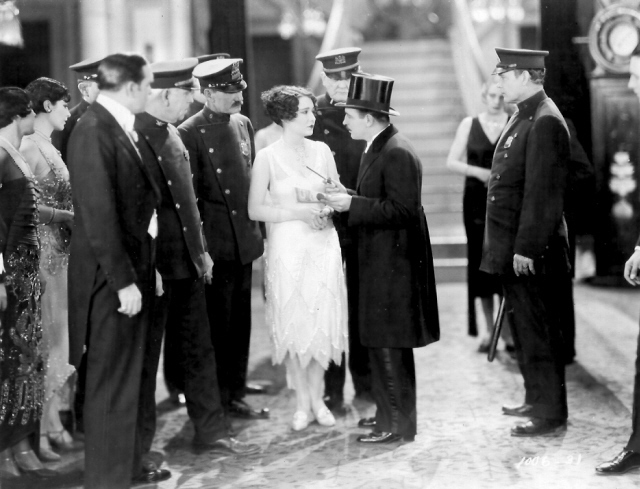
From the golden era of movies comes a film that is both a comedy and a murder mystery; it is entitled, You’d Be Surprised. This silent film was released in 1926, towards the end of that golden era, which the older generations of the Deaf community remember. The film’s director was Arthur Rosson, who directed two other films released that same year – Wet Paint (a farce) and Stranded in Paris (based on the play). B.P. Schulberg, who was, after the golden era, Head of Paramount Pictures in the 1930s, produced You’d be Surprised. Overall, a viewer of today’s generation can appreciate the work they put into the cinematography of the film. A few elements of the cinematography to discuss are the script, direction, acting, and plot. First comes the comment about the script.

A typical viewer of today would find the script of You’d Be Surprised, to be surprisingly entertaining, mysterious and comedic even upon it’s repetitiveness. A couple of phrases that were said at least four times to add humor to a seemingly serious moment were phrases such as, “Don’t touch anything! This is a case for the coroner,” as said by varying degrees of policemen and inspectors alike. There was also the daunting word, “guilty!” which was said by the bizarre jury who seemed just as keyed up to be done with the investigation as the coroner did. Their excited anticipation added superfluous humor to another, feasibly intense, moment. Another great thing about the script that a viewer might notice were the coroner’s witty statements on the title cards. It started with Aesop’s quote, then there is the playful accusation of murder to one of the women, and the coroner says, “Mayhap you did it – in a spirit of jest?” Or there is the solution to finding out who committed the crime, “…let’s offer a prize.” Other title cards are ironic, or they have the use of puns. While the script was written well, it wouldn’t be much use without the directing of the film, the second element of cinematography to be discussed.

The direction of the film seemed to be creative. It was referential to a few superstitious things such as the date, Friday the 13th, and the black cat that skulks around the houseboat. The film initially follows this cursed cat around – allowing the viewer to see different scenes of what is happening during the party before the mysterious murder. As for the acting, a viewer would find (in contrasting movies of today) gestures and expression really made up for the lack of voice or sound. Also, those who know sign language and are involved in Deaf Culture will recognize the extra effort taken for gestures and expression are especially beneficial to Deaf people’s understanding. Just as there were repetitive, comical things written in the script, similar actions were given as well.

Actions such as the coroner taking the inspector’s badge to indicate that he had solved the crime. Or there was the coroner’s corny flip of a coin to let fate decipher what would happen next. It usually worked to his advantage. Then there were the times when the policemen were told to take away the accused woman (Dorothy) and the coroner comically prevented it by his gestures and slaps. This happened three times with the inspector (Mr. Brown) and once with the deputy district attorney (Mr. Black), which provides an ironic parallel since he actually knows she did not do it. The last notable repetitive, comical action was when the coroner tries to use himself as bait, and every time he tells a man to turn off the lights, someone tries to surround him from being killed. First it’s Dorothy, then the jury, then the police officers. While this last set of actions is comedic, the resolution that follows isn’t quite as consistent.

Upon viewing the movie a second time, the viewer will notice more about the man who they arrest – Mr. Black. While he fits the character of murderer quite well with all that he says and does, the way in which he is arrested and accused is quite un-ceremonial (as compared to the interactions that happen between party guests and the playfully accusing coroner) and it is very disappointing to see that the coroner doesn’t really give him much of a hard time about being the murder. This is somewhat un-satisfying to the viewer. When something like this occurs in media, many times the viewers will observe other ways to present the same type of media to their satisfaction.

It is possible in today’s media that such a story, even to remain silent, would be a really comical and satirical skit/spoof for shows such as Saturday Night Live or Mad T.V. It would also be a good short play for high school and/or college drama programs, as I believe it would teach aspiring actors how to use more than just their voice to say what they need to say in order to portray the story. It would be very important, if the media did a re-make of You’d Be Surprised, to portray the role of the deaf butler in a more correct form, because anyone who is involved in Deaf culture will know that as a deaf character he was not portrayed correctly.

The butler was not portrayed correctly as a deaf character; they really made him seem less intelligent as they were not consistent with the idea of him having the use of his peripheral vision. Also, they seemed to direct him to have a face vacant of expression. This is another thing that misrepresents the Deaf community, as Deaf people are usually very animated in their body language and facial expression. An additional way that he was not portrayed correctly was having him hide childishly behind the chair and lastly, the fact that he was not included in the conversations, he stood as still as statue until the coroner addressed him. Even if this were how he was to act for the role of the butler, an advocate to the Deaf community would see this as an oppressive action to not include him in the conversation. Aside from the inconsistencies about the deaf character there was only two other inconsistencies that I found to be startling, first there was the positioning of Grey, the butler, when he is supposedly stabbed to his death. Then there was the fact that Grey miraculously re-appears as the deputy coroner. Let’s discuss specifically the positioning of Grey upon his “death.”

As Grey stood in the center of the room, waiting for the lights to go off, the viewer sees that he is facing the left side of the room (from the viewers perspective). When he is struck dead, he is laying facedown towards the right side of the room. Unless the murder is further investigated, this is a visual inconsistency. The viewer is to understand from this that the directionality and positioning of Grey’s body presents a sort of parallel with that of Mr. White’s dead body at the beginning of the film. This is the only real problem that a typical viewer might find within the film.

You’d Be Surprised is a witty, funny film about a murder at a dinner party, which seems like it could have been part of an influence for the game, Clue. Raymond Griffith keeps viewers on their toes for his moments of hilarity, irony, and wit. Overall, a very enjoyable silent film – especially enjoyable to those who understand the beauty of facial expression and body language. 

Sunday, February 20, 2011

Understanding the Importance of Language & Culture, The Humanity of Respecting Diverse Populations, and the Deaf Community.


Why should deaf people exist?  Why should we care?

(For a preview to this paper, please see my previous post)
This is a query that is morally and ethically disturbing but necessary to address. First and foremost, the question should not be, “why should deaf people exist?” but rather, “why should deaf people not exist.” Furthermore, why should any human being not exist or be appreciated for their cultural heritage, for their language, for their having a life on earth? This is the short answer to the query at hand, which leaves one with ponderings of all of the above questions. But it would be imprudent to leave one to musings alone without any other answer. The above questions will be answered by focusing on four main elements: first, the various definitions of a human within humanity; second, basic monotheistic religious beliefs; third, the societal perspective of disability; and fourth, the existence and richness of the language and culture of the deaf. So I will now ask a question once more, its focus being that of the definition of what deaf person is first and foremost – a human.

Starting with the simplest, yet most complicated of questions, what is a human? The Oxford American Dictionaries1 defines a human as being “a person as distinguished from an animal or (in science fiction) an alien.” Even with this definition, full understanding of what it means to be human is not gained. In turning to the thesaurus, which also comes from the Oxford American Dictionaries, there are many synonyms given to suggest further meaning of the word human. All synonyms are used as adjectives, words describing imperfection, compassion, as well as the form of a human. Let us look to the first two sets of synonyms, first being imperfection.

Humans are not perfect. This we can all agree upon. We, as humans, are “imperfect, vulnerable, susceptible, erring, [and/or] error-prone.”1 In recognition of this fact, we can then realize why we do not always give every other human being on earth, in America, in our own state, even leading to giving humans in our own community, the respect they deserve for their history, culture, language and for being a fellow human being. However, this fact describing human in imperfect forms is not justification for disrespect, belittlement, or pity upon another group of humans. Acknowledging this fact, for one-self, allows us as humans the opportunity to change what can about how we choose to live our lives and how our lives affect others. Taking advantage of this opportunity, upon self-acknowledgment, allows us to do the humane thing and treat each other with the respect deserved. In reference to acts of humanity, we can now look to the next set of synonyms, which is initialized with the word, compassion.

Humans have the capability of being compassionate. This too we can all agree upon, because compassion is a characteristic that can be learned and chosen to be utilized. Compassionate is at the front of the second set of adjectives; adjectives which are synonymous for the word human, and focus on words that are humane in nature. Words such as, “compassionate, humane, kind, considerate, understanding, sympathetic, tolerant; approachable, accessible.”1 Interesting, is it not, that a word originating from the word human is used as an adjective for “…showing compassion or benevolence?”1 Let us delve further into our thesaurus and see what some other words are for humane. Synonyms for the word are,

“compassionate, kind, considerate, understanding, sympathetic, tolerant; lenient, forbearing, forgiving, merciful, mild, gentle, tender, clement, benign, humanitarian, benevolent, charitable; caring, solicitous; warmhearted, tenderhearted, [and] softhearted.” 1

Listed also in the thesaurus are antonyms as well; humane has a solitary antonymous word: “cruel,” remember this antonym.1 One could then imply from the given differing verbiage that humans would be humane since they are connected via verbal origin. Yet it seems that if that truly were the case, we wouldn’t even be wondering why we, as people whom are a part of a community, society and population, are asking a question about a group of people who are oppressed by audism.

If humans are as humane as we’d like to be in understanding the value of another person and who they are, then we would not be questioning the importance of their language, culture, heritage and even their living existence. Do not misunderstand the meaning here, please, question another’s heritage, learn of their history and language; but question why it is important that another group of people exist and especially exist peaceably? The thought, in and of itself, is inhumane. Thoughts lead to actions, and therefore we can account for the cruel and inhumane actions that arose from these types of thought. What then, can assist us in the prevention of everyday cruelness to our fellow human beings? The answer then lies in the un-solidified and ever-changing nature of morals, ethics and philosophy.

It seems the most obvious standard of morals and ethics, taught to a vast number of the worldwide population, would be the basics of religion. A few of those basic principles will be addressed in order to describe the equality of all human beings. The majority of religious people believe that there is one divine creator. Call the creator what you will, however, for this purpose the creator will be referred to as God.

God created the world and all things in it, the first chapter of the first book of the Bible, Genesis, accounts for this.2 There are multiple notations in the Bible, and other religious books, of the past and present populations being sons and daughters of God. For example, in the book of Psalms, chapter 82, verse six reads, “…all of you are children of the most High,” in this context, the most High2 Here we recognize that we, as humans, have more in common with each other than just being of the same species. We recognize that the same divine being created us all, God created us all. refers to God.

In recent years, modern-day spiritual leaders reiterate this basic principle as we view ourselves as the offspring, or creation of God, “Man is the child of God, formed in the divine image and endowed with divine attributes.”3 In this quote, man is used to refer to all human beings, male and female. Aside from that, however, note the last phrase of the sentence and how we, as children of God are endowed with divine attributes. Many interpretations can be made from this, but no matter how it is interpreted, it literally means to be given qualities or characteristics that are set apart for each individual. So, while we were all created by God and share that as a universal similarity, He created us to all be different, to be unique people. Do the differences God created us with, give us justification to not “…love one another?”4 What is it, exactly, that causes look down upon others who are different from ourselves? How different, really, are deaf people from hearing people? Why are the Deaf so oppressed? In a blunt word, commonly associated with medicine and law, they are disabled.

Disability is the highlighted topic in Joseph P. Shapiro’s book, No Pity, which presents many points of view concerning ideas about disability and the experiences of people who live with it. People with disabilities make up a large part of what is considered to be diversity among the population. In specific reference to the disability movement, which didn’t even emerge until the 1970s, diversity is a central characteristic.5 Shapiro presents the common treatment of those who have disabilities, “[they] have been a hidden, misunderstood minority, often routinely deprived of the basic life choices that even the most disadvantaged among us take for granted… [and] … the struggle is far from over.”5 It has been over 40 years since the conscious emergence of new civil rights disability movement. Has significant progress been made? Do we really understand where our framework, for what disability It is a psycho-social effect which takes place as we are raised in society, influenced by the media, and by those people immediately around us. means, is coming from?

Shapiro goes into further detail about the psycho-social effect in chapter two, “The Social Construction of Disability.” Critical for understanding here is the point of influence, as we develop into contributing, adult, human beings, – society and culture. They are the two largest influences on how we, as a population, see what disability is and how we treat people with disabilities. We have to deconstruct what society and culture have influentially constructed and re-learn how to respectfully and ethically treat disabled people. We have to realize that every person, no matter their race, sex, physical or mental abilities, deserves to lead a life that is accessible to them, in every way, shape, and form; especially, the Deaf community. They deserve that as well, in maintaining the value of the existence and the richness of their language and culture.

The Deaf community exits in a system of biocultural diversity. According to Luisa Maffi, biocultural diversity is “…life in all its manifestations – biological, cultural, and linguistic ...”6 As language and culture are directly related, it is imperative to understand – one cannot communicate fluently in another language without the knowledge of their culture. Furthermore, it is also imperative to understand – one cannot interact fully with the people of a culture without the knowledge of their language. The concept of language, and culture is not universal. It doesn’t matter where a person is, the language and culture are going to be different from what they consider to be “home”. This type of diversity, like most, is to be appreciated. There is “…a ‘moral imperative’ to preserve diversity and to strive not for uniformity but for unity in diversity.”7 Not only is there a moral imperative to preserve that language and culture of the Deaf Community, but there is an imperative in a historical sense as well so that future generations can learn from our social and societal wrong-doings as well as rejoice in the justice we are working towards in appreciating various cultures, especially the culture (and language) of the Deaf. Comprehending diversity, especially biocultural diversity, “…should contribute to our understanding that diversity in nature and culture makes us human.” Having the understanding of diversity in nature and even in our and other cultures gives us the ability to recognize that all people are human and should be treated equally. The Deaf community are humans and deserve to have a life that is of equal opportunity and should be allowed to live up to their fullest expectations. We have shown the various perspectives for equal opportunities of the Deaf, using these four main elements: first, the various definitions of a human within humanity; second, basic monotheistic religious beliefs; third, the societal perspective of disability; and fourth, the existence and richness of the language and culture of the deaf. All of these elements, individually, show that the Deaf are important members of society and are crucial to not only their own culture but ours as well.

References:

Top, edited, photograph: http://www.nature.com/nature/journal/v448/n7157/images/448998a-i1.0.jpg


1. Oxford University Press, Initials. (2011). Oxford american dictionaries, Retrieved from http://www.oxfordreference.com/pub/views/home.html
2. Bible – King James Version
3. First Presidency, "The Origin of Man", Ensign, Feb. 2002, 26
4. John 13:34
5. No Pity Introduction, pg 11
6. Linguistic, Cultural, and Biological Diversity journal, pg 602
7. Linguistic, Cultural, and Biological Diversity journal, pg 603


~Written by Holly E. Ferrin, Deaf Studies Senior~


© 2011 Holly E. Ferrin


Friday, February 11, 2011

Understanding Disability - Part 1


This whole thought process started with a homework assignment from my professor in my Disability Theory class. The questions, on the outside, seemed like they would be simple enough to answer. I was grossly mistaken. I thought, thought and thought. I researched, read, and studied. I even resorted to asking friends on Facebook what they thought so I could get more opinions and ideas. Little did I know that it would be quite the controversial topic. The official question was this... "Why should deaf people exist? Why should we care?" The first response happened within the hour and I sighed upon reading it, virtually smacking my hand against my face.

Andrew had blatantly replied with, "
Sounds like someone is looking for an excuse to commit genocide." Great, just great, was the first phrase to come to mind. We now have the idea in mind that this question leaves the questioner looking for an excuse to commit genocide. That was the last thing I ever wanted coming up, but Andrew did make a great point, which then stemmed my next thought and honestly lead me to the basis of my response. I said, "Well, [my professor's] thought is that if we are going to be advocates for the Deaf, then we have to start by advocating their life. [I do agree with him about this] ... I personally believe we are all God's children and that we should treat one another as we would want to be treated. That is my short answer..." The comments from that point varied, and I appreciated all of them.

The next great comment made was written by Jillian, she said, "[Deaf people exist]
Because differences exist - to make us realize that we have to tolerate others. We should care because if deaf people ran the world, then we would be the minority and we'd want them to care." She made a brilliant point with this, especially in recognizing that deaf people exist in a minority. The next comment made was from the mouth of a teenager. Teens are stigmatized into a social category of not really caring about anything else other than themselves.

Kevin, who is also my relative, made the following comment, "
A deaf person can accomplish anything a person who isn't deaf. ...we should care for them because they are still human beings." If Kevin had been there in person, I swear I would have kissed him on the cheek for his youthful honesty.

I save the meanest, but best, for last. I must note the acting antagonist in the thread of comments. Peter, who can also be found on blogger, gave us a taste of reality with his comment - because sadly, this is how many people see it.


"
I could argue in defense of the beautiful language that is attached to deafness that would disappear, but our society already frowns upon the language, encouraging Cochlear Implants and Oralism. I hope you understand what I mean with that statement. If not, let me know and I will explain further.

I could also argue in defense of the incredible culture of the Deaf, but our society is ignorant to its existence anyway. Its preservation would only be for the "burdensome" minority and its "sympathy" followers like you and I.

Lastly, maybe one could argue that God made them that way, and they are perfect just the way they are. But we all know that God wouldn't do that to someone... put them through the pain and struggle of being deaf. It is clearly the best choice to allow science and technology to "cure" them of their ailment."
I didn't feel terrible about this comment because I know Peter is a good guy and he was only re- opening my eyes and the eyes of my peers to the reality of society's views. It was good to think about. It was good to have dignified view in opposition of my own. Peter later suggested that I view this video on YouTube. I urge you to view it as well.


There were many other great comments and I wish I could quote them all, but if you are one of my "friends" on Facebook, then you've probably already read it. Until then, click on the link below to read my paper for further information. 

Enjoy!

Please Comment!

Thanks!

~Aud Fariy


Sunday, April 13, 2008

Unwritten, Unafraid, & Untitled

Wow, it is has been nearly two weeks since I have said a word here... that is kinda unusual. Well, today is Sunday and I think it is time for an update. I am sure that there might be question about what the title means, and really it is sort of my mood right now, and I didn't know what to call this post and there are so many things that I wish to address in this post but I don't think I have the time nor mental capacity to put all my thoughts out here. I think I will work from the most recent events and work backwards - I'll see how far I get.

This past week has been a roller coaster for me it was extremely stressful and it was exhausting. I'm still on the fritz with my close friends, and honestly, so much has happened since that argument that I am beginning to wonder why I let things get to me and why I let things get so out of control, because looking back at it, it was the dumbest thing to get mad about...

A couple of people whom I still consider friends, broke up this last week. I couldn't believe it when I heard it and I tried to tell the person who broke it off that he didn't have to do it the way he did and that his breaking up with her hurts not only her but the people around both him and her. I don't think I have ever been in a relationship with the level of seriousness that he had for her but I can only imagine how much it must have hurt. I wish that I could help them both and make it work but I think that it is too late for that - too late for me to be allowed to help and offer suggestions. In the words of OneRepublic "It's too late to apologize," which is an extremely hard thing for anyone to hear.

This last week I had a paper to write for English and unfortunately I had put it off a bit, I mean, I had done the research and I had gotten it started, but it was no where close to being done when I got going on it again. So I had induced stress that didn't need to be there along with the uncomfortable feeling of tenseness with my friends. My week was sleepless, I probably got a maximum of 4 hours of sleep in a night and a minimum of 3 hours of sleep. Even with all of what was going on this last week, lets add one more thing to the pile. The Deaf Studies Today Conference was going on all this week at UVU, it was an amazing conference, I only attended the days that had workshops and presenters, I missed the Deaf Artwork and Film Festival. I volunteered my time to helping some of the presenters but I was also able to go to workshops of my choice as well. Needless to say, my decision to cut out the caffeinated soda in my diet was ruined, I mean, I couldn't function through the day without a little jump-start to my day. I know that is terrible, but that is what comes of dating a guy for eight months who loves Mountain Dew.

More about the Deaf Conference, it was very enlightening to have those who are in the Deaf Community speak (or sign as the case may be) about what issues were prominent int today's Deaf Culture. There were 4 main things that I will sharply remember about the conference, and I will probably blog about them in detail at a later date.
  1. The feature film The Wrong Game
  2. Presentation by authoress Ella Mae Lentz about Deaf Studies
  3. Discussion about the Importance of Interpreters in the Deaf Community
  4. How Deaf people are represented in the Media
There is going to be a conference coming up this summer and it is going to be in Milwaukee and it is in late June. I hope that I can get my sister to deviate from our plans and make a side trip to Wisconsin.

Well, most of you know that I was gone for a bit on the band trip and it was better than I thought it would be. I mean when I heard that we were going to Durango, Colorado, I wasn't exactly stoked for it - I mean, I was glad to get away from school for a bit but I thought, "Colorado... woo-hoo... *moves index finger in circular motion with bored look on face* " But it actually was a good experience, it was interesting and fun and I got a chance to really get to know my fellow band-mates better. I got a chance to seriously be independent since Butch isn't a thing like Doc.
I had the opportunity to understand what it is like to find out what one of my friends is really like and how sometimes they are not who you think they are at which time I reflected upon how I had been as a friend and I think I got a taste of my own medicine, so to speak...

Durango was interesting, the group of people that I hung out with all went to a family Mexican restaurant called Tequila's and all of us were just fascinated with how the bar-tender made drinks at the bar for other patrons since we were all from Happy Valley and had never seen a bar before - lol. We had a table that was just off to the side of the bar and so we could see all that he was doing and noticed that he put 6 shots in the Margaritas. Oh, and the fried ice cream was soooooooooooooo good! At one of the stores in Durango, I bought an ugly doll, and he is so cute, his name is Wedgehead! This is the little quote that comes with him...
Wedgehead has his eye on you. And he likes what he sees!
He knows exactly what you mean. Of course he has to stand
on his head to do so...but he totally gets it. See...you are his
proof! Evidence that humans really do exist! But to prove this
to his best buddy Ox...Wedghead needs something. You know
that pocket change you've been saving? Yeah, Wedgehead
kinda needs all of it. No? OK. Hug?
I had a ton of fun when we stopped in Moab at "The Hole in the Rock," Butch cooked steaks and some of the more experienced band members cooked dutch oven cheesy potatoes and buttery bacon and mushrooms to go over the steak. I also learned how to play a football game called 500 and one of the trombone guys, Nate, told me that I had a good arm and a good "spiral." No worries though, he is married so I'm not over analyzing this guy.

Here are some pics from the trip


Monticello, Utah Temple


Frozen Grass in Monticello


Up-close Frozen Grass


Self-Portrait of me on the Bus
(which looks pretty good, since I had just gotten out of bed)


At The Hole In The Rock, Moab


Kris and Danny (Clarinet and Alto Saxophone)


Lacey, A-Reum aka "Autumn" and Corbin (Trumpet, Flute and Trumpet (I think))


Playing "500" with the guys
(Photo from Mark)


Redrocks


Ok, well I have more fabulous pics that I would love to show you, but the uploading is killing me for time so I am going to stop for now. I hope that was a good update for ya'll. TTYL

Love Always,
~Holls

Friday, February 1, 2008

Bob's House

So, today in my ASL 2010 class, Flavia (my professor) showed us the sneak peak to the Superbowl commercial that will be aired this Sunday. To my knowledge, this is one of the first times that there has been a commercial that has been done totally in sign language. I am so excited to see it!

Unfortunately, some of the people who responded to the commercial are ignorant of what wonderful culture Deaf people have and how beautiful their language is. I suppose they have not had the opportunity to learn more about Deaf culture, that can be the nice way of saying it.

Flavia encouraged us to read the comments that were made about the commercial so that we could see how Deaf people are opposed and discriminated against even today - 19 years after the reformation. I will post the video here, but I urge you to make your comment on YouTube as well. This is history in the making and we cannot let it fall to those ignorant enough to make such biased comments.


I absolutely loved this commercial and found it hilarious. The commercial is based off of a Deaf Culture joke about "Bob's House."
Link
If you want to see the behind the scenes of making this commercial as well as some explanation about the history of the joke, check out this link.

Please make your comments here, YouTube, or wherever. Pass this video along to your friends.

If you have any questions regarding this video or Deaf Culture, don't hesitate to ask.

~A 'terp-in-training~
~~Holls~~